





Forex traders can spot more precise price action by utilising different time frames as they identify more significant trends. However, while switching between different time frames on the same currency pair, different viewpoints can form, which can either help or hurt the analysis. Therefore, the first time you trade Forex, it is imperative that you have a solid grasp of the Forex timeframes.
This guide introduces the concept of Forex time frames, their challenges, why they are helpful, and how you can use them.
What are the time frames in Forex trading?
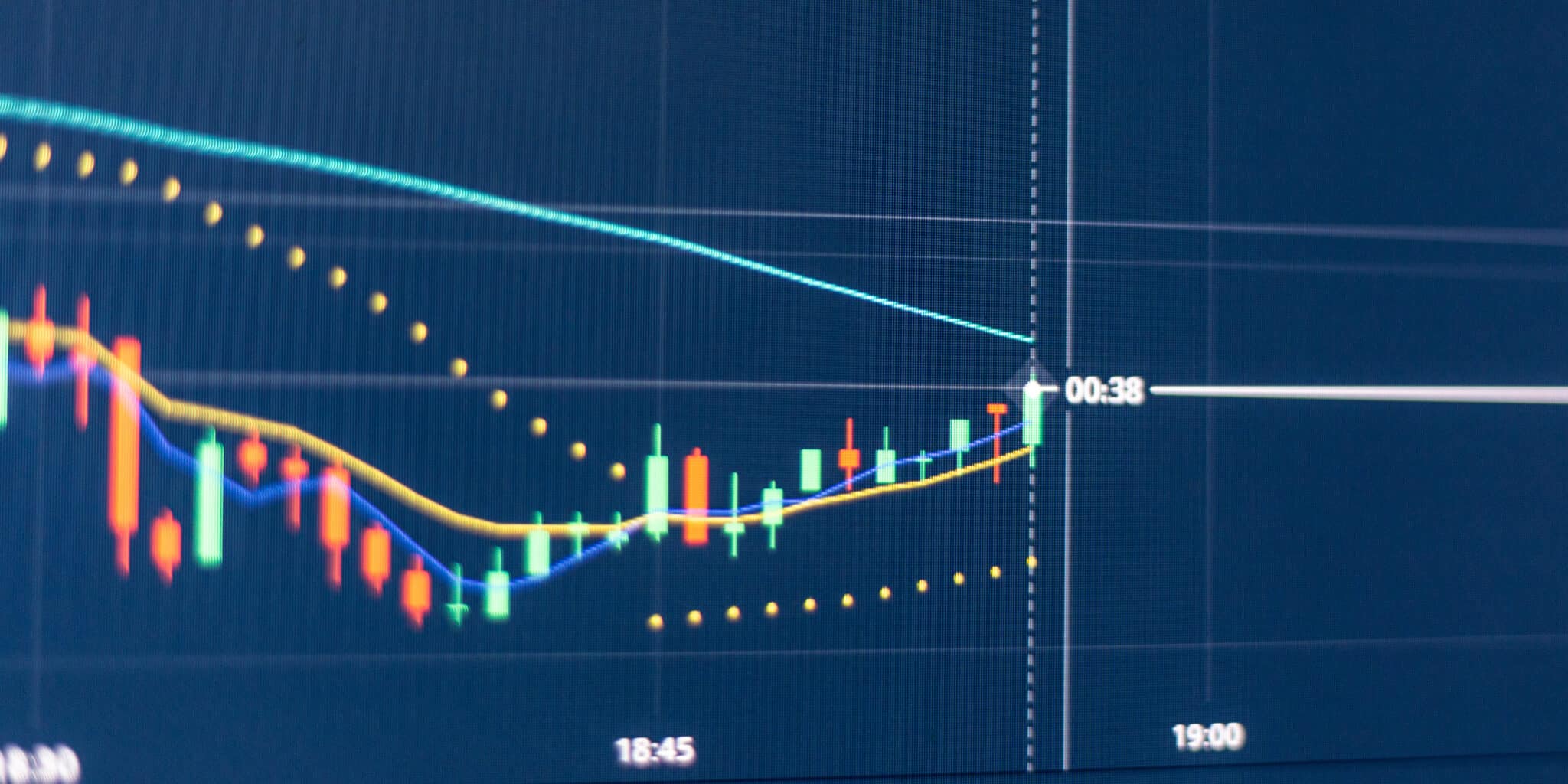
A Forex trading timeframe can serve as any defined period in which trading occurs. The timeframe will typically occur in minutes, hours, days, or weeks for Forex. Depending on your trading strategy, you will choose the most appropriate timeframe.
You can start trading Forex using timeframe analysis once you have done your market research and determined your type of trader. Then, during Forex market opening hours, you’ll be able to take a position and work within a particular timeframe.
What Forex timeframe should I trade?
Various Forex time frames and trading styles have a direct correlation. For those wondering which Forex timeframe is best, you must first determine the type of trader you want to be. In trading, some deal with very short timeframes, such as scalpers, and those who deal with longer timescales, such as investors. Based on your trading style, you will choose the best Forex timeframe.
Best Forex timeframes for scalpers
In scalping, traders identify small price changes in the Forex market and then buy and sell large amounts of currency within a short timeframe. In this manner, scalpers aim to accumulate small profits that add up to a decent day’s earnings.
In most cases, scalpers work within concise time frames of one minute to fifteen minutes. Scalpers prefer, however, shorter timeframes such as one- or two-minute. You must first choose a currency pairing with a highly liquid market, after which you may open an account with us.
You can use trend analysis to select an appropriate entry point by buying into the market and watching the market movements. You can then buy a certain amount of your chosen currency, and it will tick up very slightly within one minute. After it ticks up, you sell your holdings, pocket the profits, and repeat the process.
If it hasn’t ticked up by the end of the one minute, you’ll sell at a loss before trying again to profit from the next one-minute period. If you set up a strict exit strategy, you will minimise your risk of losing money by protecting your small gains from being wiped out by one significant loss.
What is the best trade frame?
It is impossible to determine the best time frame for Forex trading, but some styles use specific frames. Generally speaking, there are three main time frame types:
- Position trading time frame: Daily, weekly, and monthly charting time frames.
- Swing trading time frames from 30 minutes charts to the Daily chart time frame.
- Day trading time frames from 1-minute chart till 30 minutes chart time frame.
1. Position trading?
Position trading is a trading style in which traders hold their positions open for several weeks to several months or even for several years. Positional trading strategies rely on fundamental analysis with a broad stop loss.
There are many different ways to trade positions. According to the “long term” definition, the duration may range from daily to annually.
New traders often avoid this trading timeframe since the trades typically last a long time. As a consequence, trades will progress slowly. The short-term approach of many traders (day traders) can also benefit since these strategies can sometimes pose problems. Learning the right day trading system can take a significant amount of time.
The position trader that uses the long-term approach can spot trends by using the monthly chart and spot buying opportunities by using the weekly chart.
Position trading example
Here’s an example scenario to help you understand what it is. The first step would be to analyse a monthly chart and determine the general trend. As an example, let’s say that the chart trend shows lower highs and lower lows, which indicates a downward trend.
If you see this, you might consider entering a weekly position. You could use the price action and technical indicators to determine good entry points.
2. Swing trading time frame
Trading swings capture gains over several days (more than one day) or weeks in any financial instrument. Most swing traders base their decisions on four-hour (H4) and daily (D1) charts, and they may combine fundamental analysis with technical analysis. Please visit our website to learn more about swing trading forex.
Swing trading entails trading in the following timeframe. You may consider switching to a slightly shorter time frame after getting familiar with long-term charts. That would mean fewer holdings. However, this can result in more volatility and price fluctuations, so risk management must be well informed.
Swing trading occupies the middle ground between day trading (a short-term approach) and position trading (a long-term strategy). A swing trading strategy involves opening and closing positions within days of each other. A swing trading approach to trading the markets is relatively popular since it benefits both trading styles without drawbacks.
Charts are typically checked for significant movements several times a day in swing trading. Unlike day traders, these investors are not glued to their screens all day since they aren’t always watching the market while trading; they have lots of flexibility.
The swing trader takes a position after identifying an opportunity. You can then track the position’s performance later with alerts. In swing trading, traders usually use charts to identify appropriate opportunities compared to long-term traders. Traders who use weekly charts are less likely to notice these since they tend to be shorter-term.
In most cases, after identifying the direction of the trade, traders will switch to the 4-hour chart. This is because the 4-hour chart allows them to identify potential entry points. In addition, traders often analyse this chart to identify resistance levels. For example, the candle closing above the resistance level could be a good entry point.
3. Day trading time frame
Our final timeframe is the day trading timeframe. One of the most popular trading times for new traders is the day trading period.
Day trading is among the most challenging trading periods to find profitability. New traders will have to make frequent buying and selling decisions to practice day trading. Inexperienced traders who make regular trades are more likely to experience losses than those who take a longer-term approach.
Small market fluctuations are at the core of the day trading approach. Day traders often need to stare at their screens for an extended period to identify profitable trades. Staring at screens for long periods can be exhausting. The advantage of short-term planning is a smaller margin for error.
A day trader generally has less profit potential than a swing trader. Tighter stop levels are therefore necessary. However, tighter stop levels can sometimes result in more trading losses than those associated with a longer-term approach. So before you start day trading, you become familiar with long-term and swing trading.
In what way does analysing time frames make an impact on Forex trades?
A variety of time frames for trading Forex has many advantages that you cannot deny. The similarities between Forex and stocks are apparent when considering time frames for trading. The market’s high liquidity means traders will have access to short-term information and meaningful views due to the Forex market’s robust liquidity.
In contrast, when dealing with forex pairs that do not possess a high level of liquidity, the trader may not benefit from a short-term timeframe since it will not provide much new information in situations where there hasn’t been any price movement.
A further advantage of using Forex trading time frames is that the Forex market operates 24 hours a day, seven days a week. Consequently, when different Forex timeframes occur during distinct trading periods, traders face various market conditions. Consider that this will allow for various markets during the Asian trading period.
During the crossover period between the United States and Europe, you can look at the trending markets. So, traders can take advantage of the varying characteristics of these markets to find good entry points by using different time frames.
Forex traders new to the market often wonder whether specific Forex trading time frames are more potent than others. It is determined by how a trader trades and strategies to determine the best trading time frame. It is different for day traders and swing traders to choose the right time frames.
What is the standard time frame for day trading?
Typically, day traders use a 30-minute time frame. Day-trading strategies utilise lower time frames such as m1, m15, and m30, and swing trading strategies utilise higher time frames such as H4 and daily charts. Picking a trading timeframe largely depends on your trading style and goals.
As long as you are knowledgeable about your positions and comfortable taking them, all trading timeframes carry the potential for significant profitability. Also, keep in mind that not all trading time frames are equal. Trading is comfortable for me when you use multiple timeframes. That’s up to you.
How to perform multiple timeframe analyses?
When analysing a currency pair, several different periods are considered to uncover the most trading opportunities.
Most traders will choose one longer timeframe and one shorter timeframe to begin. In general, traders use ratios of 1:4 or 1:6 during multiple timeframe analyses. The more extended timeframe is the four- or six-hour chart, and the shorter timeframe is the one-hour chart.
Using a more extended timeframe will help you identify trends while using a shorter timeframe will help you identify ideal entry points into the market. It may be helpful to include a third, medium-term timeframe to analyse the market trends at a more granular level.
Multiple timeframe analysis techniques can manage several trading positions without increasing risk. You may also use indicators to assist with this approach.
How does time frame analysis impact Forex trades?
Diversifying your Forex trading time frames has many benefits. Viewing the two side-by-side, it becomes obvious why. Traders can access concise time frames in the Forex market and observe meaningful information. In contrast, if the price of an illiquid stock does not change, a similar time frame may not present new information.
The 24-hour nature of the Forex market during the week is another advantage of using Forex time frames. Traders who switch between multiple Forex time frames during different trading sessions can experience differing conditions specific to those sessions, for example, range-bound markets during the Asia session or trend-driven markets during the crossover between the European and US sessions. To find the ideal entry points, traders can use various time frames to capitalise on these market characteristics.
FAQs
- Which time frame is best for Forex trading?
The 1-hour charts are the most comfortable for some Forex traders. Trade signals are fewer, but not too few, in this time frame. With this time frame, you can take your time analysing the market and will not feel rushed.
- What time frame do most traders use?
Day traders interested in multiple stocks throughout the day are most likely to use the 15-minute time frame. Therefore, chart intervals should be higher if the watchlist is longer.
- How do you trade a 5-minute timeframe?
Place a stop at the swing low on a five-minute chart if you are trading aggressively. Use a stop-loss 20 pips below the 20-period EMA for a conservative trade. To sell the first half of the position, add the amount risked. To sell the second half, move the stop to breakeven.
Bottom line
Summarising the Forex time frames, Forex traders should be familiar with timeframe analysis. Different trading strategies are best suited to specific timeframes. The shortest timeframes tend to be used by scalpers.
The trading hours for Forex are generally between four and six hours per day for day traders. Longer timeframes are beneficial for swing traders. Traders may hold positions for several months. Analysis of multiple time frames can assist traders in identifying trends and optimal entry points.